

What if more of your travel budget went towards your trip, not government charges, fees, and taxes?
Air travel connects Canadians to family, communities, business, tourism, and opportunity. But when you book a flight, you’re paying for much more than just the flight itself.
Government taxes and third-party fees add to the cost of flying in Canada, making it more expensive for Canadians to stay connected with family, friends, and businesses at home and abroad.
The good news? It doesn’t have to be this way. By lowering the government taxes and fees added to air travel, Canada could put more trips, more visits, and more opportunities within reach.
You’re paying for more than just your flight.
When you book a flight, the price you see includes more than the cost of getting from A to B.
Under Canada’s user-pay model, passengers, airports, and airlines are responsible for funding much of the aviation system. That means additional costs are built into the price of flying, even though airlines don’t control all the fees themselves.
Government taxes, navigation fees, security charges, the rent collected by the federal government for airport land, and other charges all add to your final ticket price. These costs are set by governments and third-party organizations.
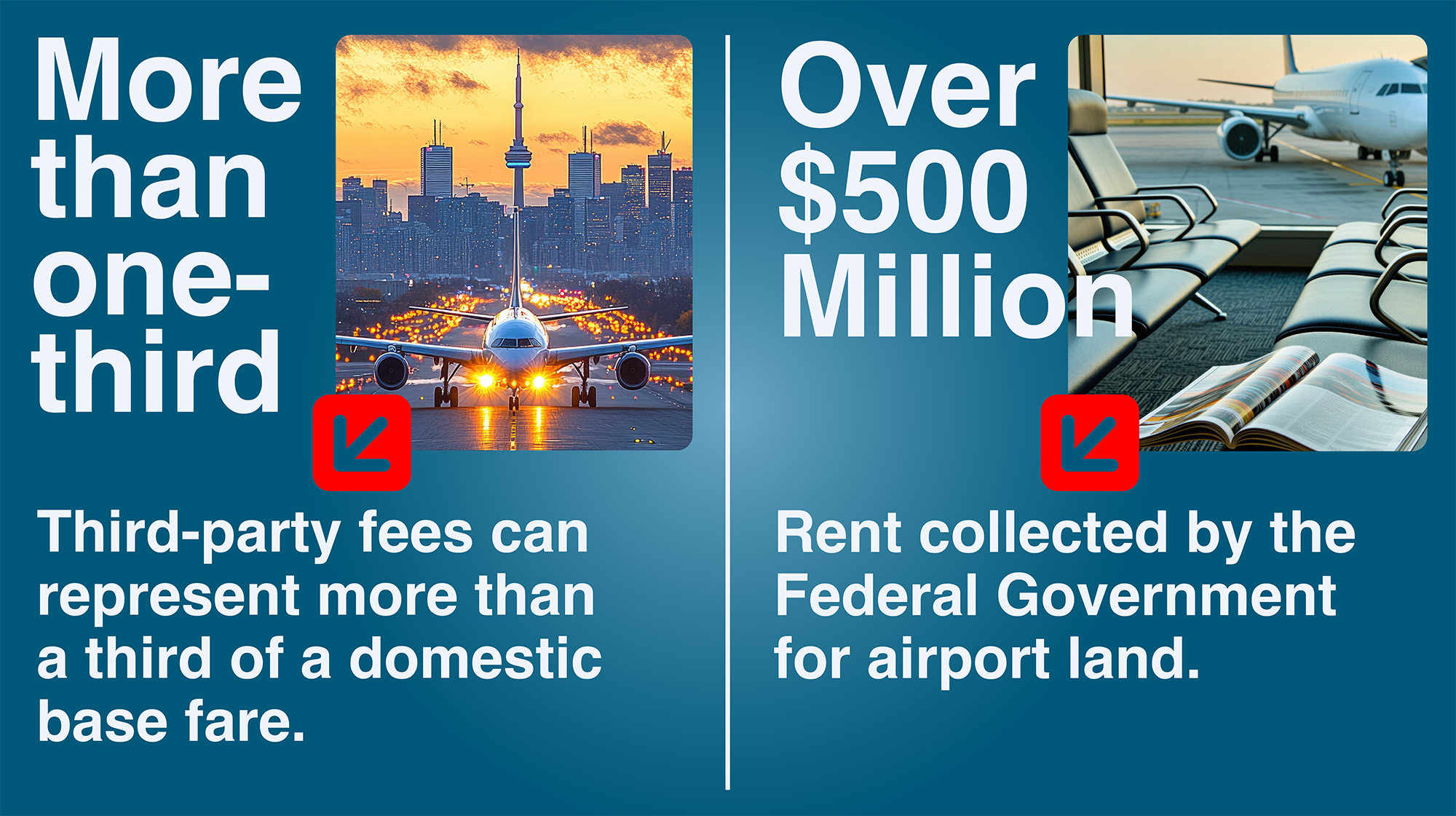
Not every charge on an airline ticket goes back into aviation. Some revenues flow to the government instead. For example, the Government collects more than $500 million in airport rent per year without reinvesting it in the air travel system. As a result, users can pay substantial costs without seeing an equivalent level of reinvestment.
For travellers, these charges add up quickly, especially when booking for a whole family.
Did you know?
So, what exactly are you paying for?
When you buy an airline ticket in Canada, different players in the air travel ecosystem are responsible for different parts of the cost.
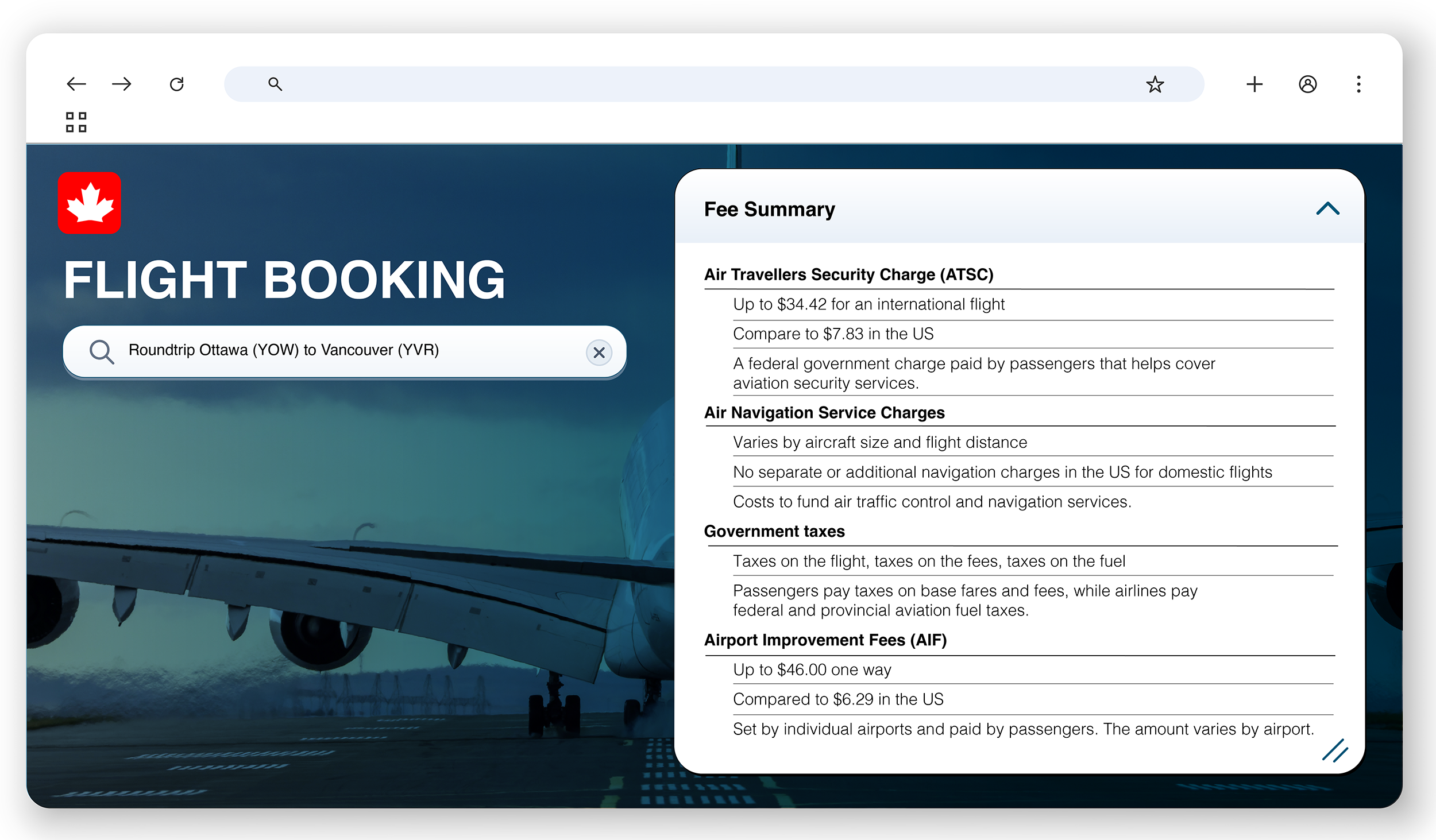
In addition to these fees, which are charged separately, the cost of airport rents, Payment in Lieu of Taxes (PILT), and navigation fees are incorporated into charges on airlines, that then result in increased airfares.
Airport improvement fees are charged to support airport infrastructure. The government collects rent and sales taxes on these charges, leaving only a portion left for airports.
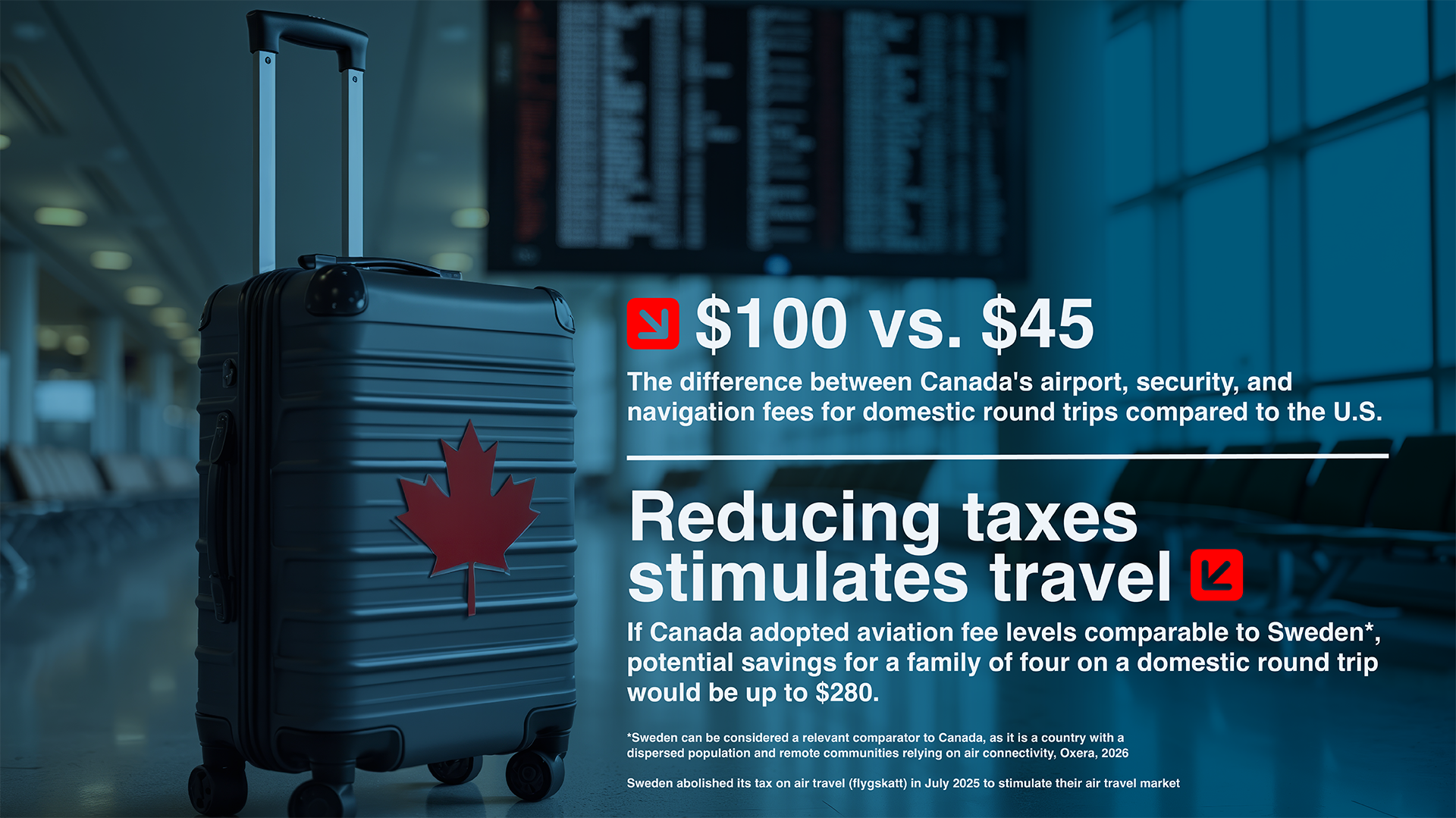
What could lower fares mean for your next trip?
Whether you’re visiting loved ones, exploring Canada or the world, every dollar added to your ticket affects what you can spend on your trip or save for the next.
Airport Privatization
The federal government is actively looking to attract private investment into Canada’s largest airports. This presents an opportunity to modernize infrastructure, improve efficiency and deliver better outcomes for Canadian travellers and the economy.
As the government develops its proposed airport operating concession model, it will be important to establish clear, enforceable rules that protect travellers and airlines from unreasonable fee increases and ensure that affordability remains a priority.
Any value unlocked through these arrangements should be reinvested directly into Canada’s aviation system, into much needed airport infrastructure improvements, and to reduce costs in order to ensure air travel is affordable for Canadians.
More connection. Less cost.
Canada can make air travel more affordable. Reinvesting the money collected and lowering government-imposed taxes and fees could mean more opportunities to visit family, explore Canada and the world, support Canadian businesses, and connect communities.
A more competitive approach to aviation costs could help put more of those connections within reach.
The more Canadians understand what’s included in an airline ticket, the better informed the conversation about air travel affordability can be.
Explore the facts. Share what you’ve learned. Stay connected.
Questions & Answers
There’s more to the price of an airline ticket than meets the eye. Here are some important things to know about how Canada’s aviation system works.
Q: Doesn't the airline decide how much my ticket costs?
Airlines set their base fares, but the price you pay also includes taxes and third-party charges that airlines must add to your fare.
Airlines don’t independently determine every charge included in the final price of your ticket. Government taxes, navigation costs, security fees, the airport rent collected by the federal government, and airport charges all add to your final ticket price. These costs are set by governments and third-party organizations, not airlines. When these third-party costs are factored into the total cost of a flight, the profit margin for Canadian airlines is narrow.
Q: Why don’t airlines just lower their fares?
Airlines already operate on very thin margins. IATA forecasts that in 2026, airlines globally will earn an average net profit of just US$4.50 per passenger — a 2% profit margin. There simply isn’t much room to lower fares by cutting airline profits alone. Making air travel more affordable also means addressing the taxes and third-party fees added to the cost of flying.
Q: What are third-party fees?
Third-party fees help pay for aviation services and infrastructure and aren’t set solely by airlines. In Canada, these fees are among the highest in the world — adding to the cost of every trip Canadians take.
Q: Why are these charges added to my ticket?
Canada’s aviation system is largely based on a user-pay model. Passengers and airlines bear much of the cost of the aviation system. Many of these charges are set by governments and third-party organizations, not airlines, but ultimately contribute to the price travellers pay.
Q: Do all the taxes and fees I pay go back into aviation?
No. Some charges help pay for aviation services and infrastructure, but other revenues go to government rather than being reinvested directly into the air travel system. For example, the Government collects more than $500 million in airport rent per year without reinvesting it in the system. As a result, users can pay substantial costs without seeing an equivalent level of reinvestment.
Q: Does Canada have to keep the current fee system?
No. The taxes, fees, and funding arrangements associated with air travel are influenced by government policy decisions. Looking at comparable systems in other countries shows there’s an opportunity for Canada to reconsider how these costs are structured and find ways to improve affordability.
Q: Will airport privatization reduce costs for travellers?
It depends on the objectives sought by government. The goal should be to ensure that any value unlocked from airport privatization supports a stronger, more efficient aviation system that benefits Canadians and the economy.
That means reinvesting those funds into Canada’s aviation system to modernize infrastructure, improve efficiency, and deliver better outcomes for travellers and communities.
Before “privatizing” airports, government should establish a clear regulatory framework that protects travellers and airlines from fee increases and supports investment in the system and its infrastructure needs.